Design Thinking
What the five famous steps get right, and what they quietly leave out.
Design Thinking
A designer watched a child cry in front of his machine
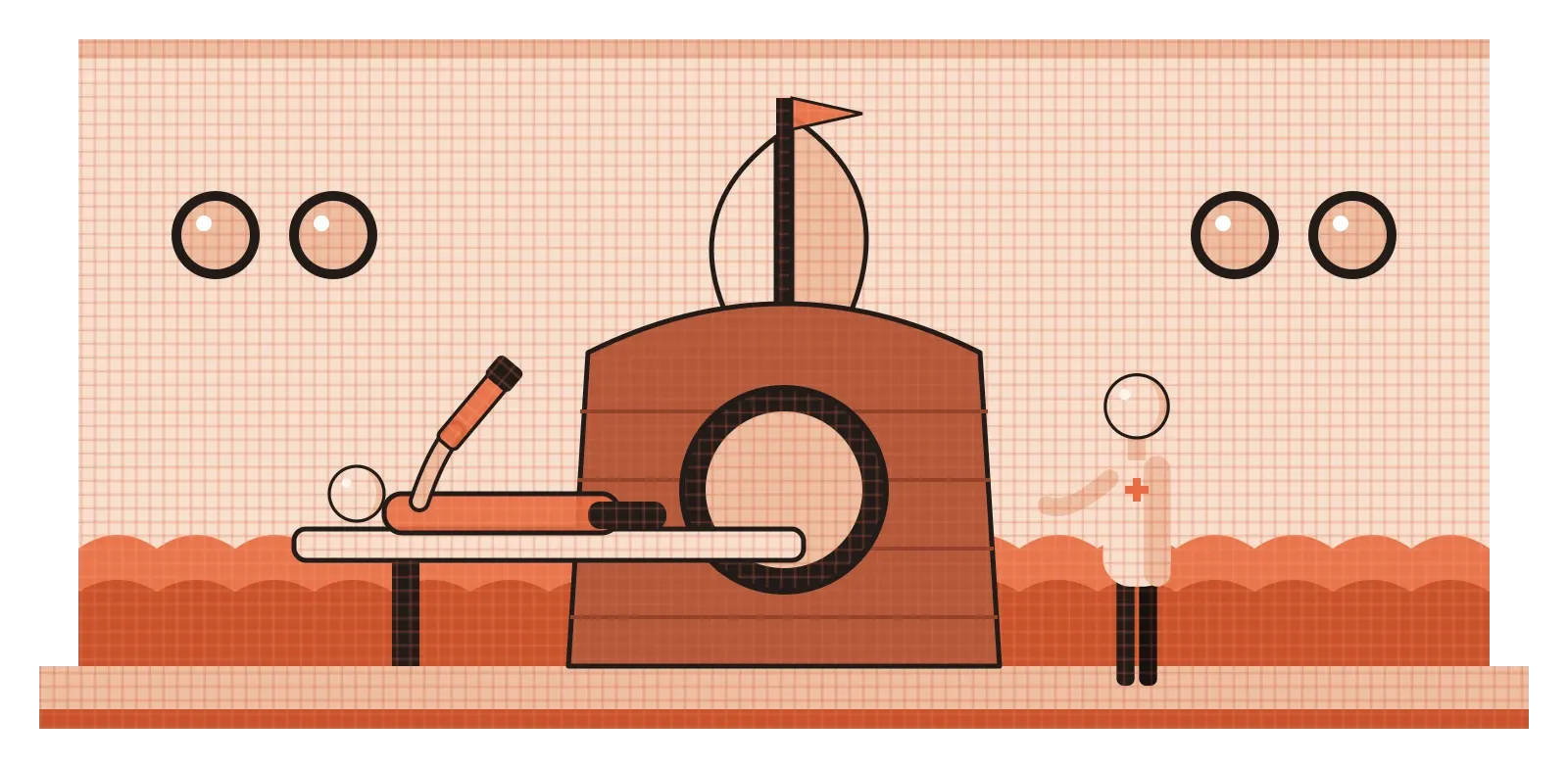
Doug Dietz spent years as an industrial designer at GE Healthcare, working on MRI scanners. He has told the story of visiting a hospital to see one of his machines in use, feeling proud of it, and then watching a young girl being brought in for a scan. She was terrified. To her, the scanner wasn't a clever piece of engineering. It was a huge, loud tunnel in a cold room, and she was being asked to lie still inside it. Dietz later learned that many children were so frightened by scans that hospitals had to sedate them just to get them through. Nothing about the machine was broken. It did exactly what it was designed to do, and it was still failing the people it was meant for.
What Dietz did next has become one of the stories people use to explain design thinking. Instead of tweaking the hardware, he and his collaborators redesigned the experience around the children. Scanner rooms were painted as adventures, with one machine turned into a pirate ship and others into jungles or spaceships, and the staff were given scripts that turned the scan into part of the story, such as staying very still so the pirates wouldn't notice you. The scanner itself barely changed. According to the accounts Dietz and GE have shared, far fewer children needed sedation afterwards. It's a lovely story, and it's also a useful way into a term that has become so popular that it now means very different things to different people. So it's worth slowing down and asking what design thinking actually is, where it came from, and where it falls short.
The idea is older than the sticky notes
The phrase sounds like a 2010s business trend, but the thinking behind it goes back much further. In the 1960s, researchers in Britain and America started trying to describe how designers actually work, partly in the hope of making the process more systematic. Herbert Simon's 1969 book The Sciences of the Artificial, which I wrote about in the previous post, treated design as a general way of changing situations for the better. At Stanford in the 1960s and 70s, an engineering professor named Robert McKim was teaching what he called visual thinking, encouraging engineers to sketch and build as a way of reasoning. In 1987, the Harvard architecture professor Peter Rowe published a book with the plain title Design Thinking, about how architects and planners approach problems. For a long time, the term mostly lived in academic research about designers.
It moved into the mainstream through one design company and one university. IDEO, the design consultancy formed in 1991 by David Kelley and others, became famous in the 1990s for projects that ranged from early computer mice to toothbrushes, and it began to describe its human-centred way of working as something other organisations could learn. In the mid-2000s, Kelley helped set up the Hasso Plattner Institute of Design at Stanford, better known as the d.school, which taught this approach to students from every discipline, not just designers. Then, in 2008, IDEO's chief executive Tim Brown wrote an article called "Design Thinking" for the Harvard Business Review, followed by a book, Change by Design, in 2009. That was the moment the idea reached boardrooms. Within a few years, banks, governments, hospitals and consulting firms were running design thinking workshops, and walls everywhere were covered in coloured sticky notes.
The five steps, and a baby warmer that shows them working
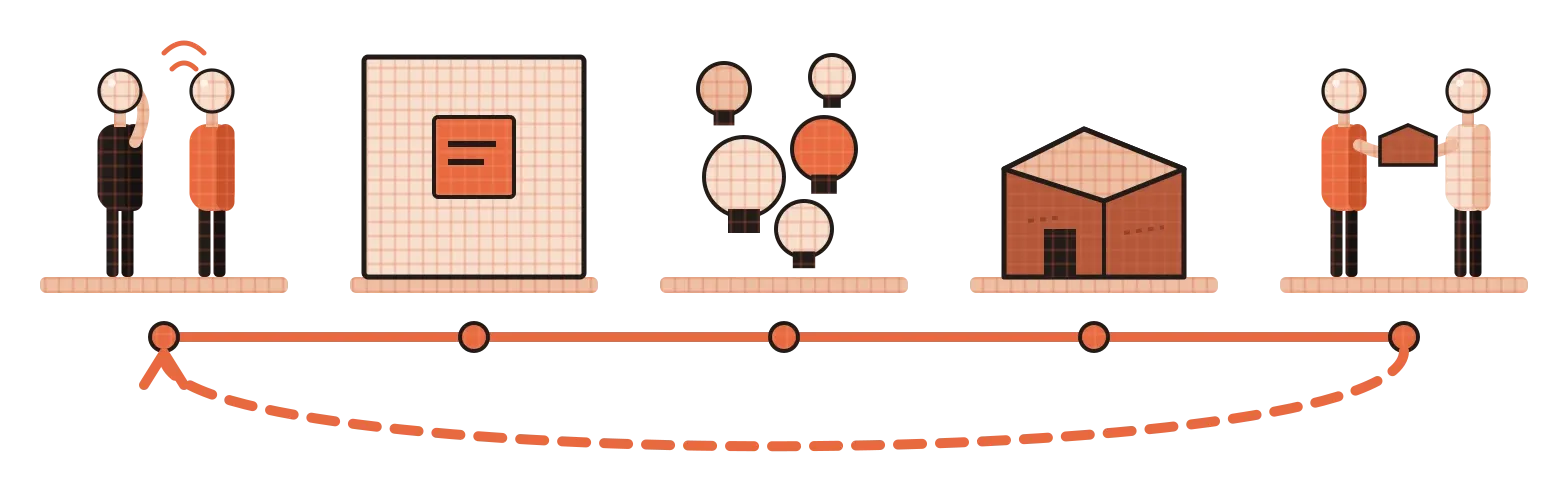
The most widely taught version of design thinking comes from the d.school, which describes five modes: empathise, define, ideate, prototype and test. Empathise means spending time with the people you're designing for, watching and listening, so you understand their lives rather than guessing. Define means turning what you learned into a clear statement of the problem worth solving. Ideate is where you generate lots of possible solutions without judging them too early. Prototype means making quick, cheap versions of the most promising ideas, and test means putting those prototypes in front of real people to see what happens. In theory, what you learn in testing sends you back to earlier steps, so the whole thing loops rather than running in a straight line.
The example that explains this best, for me, is Embrace. In 2007, a group of graduate students in a Stanford course called Design for Extreme Affordability were asked to design a cheaper incubator for premature babies in developing countries. Incubators are expensive, and premature babies who can't keep themselves warm are at serious risk. The obvious move would have been to engineer a low-cost version of a hospital incubator. But when the team travelled to Nepal to see the situation for themselves, they noticed something that changed the brief. Many of the babies who most needed help were born in villages far from any hospital, and even where incubators existed, they often sat unused because of cost, power supply or a lack of trained staff. A cheaper hospital machine wouldn't reach those babies at all.
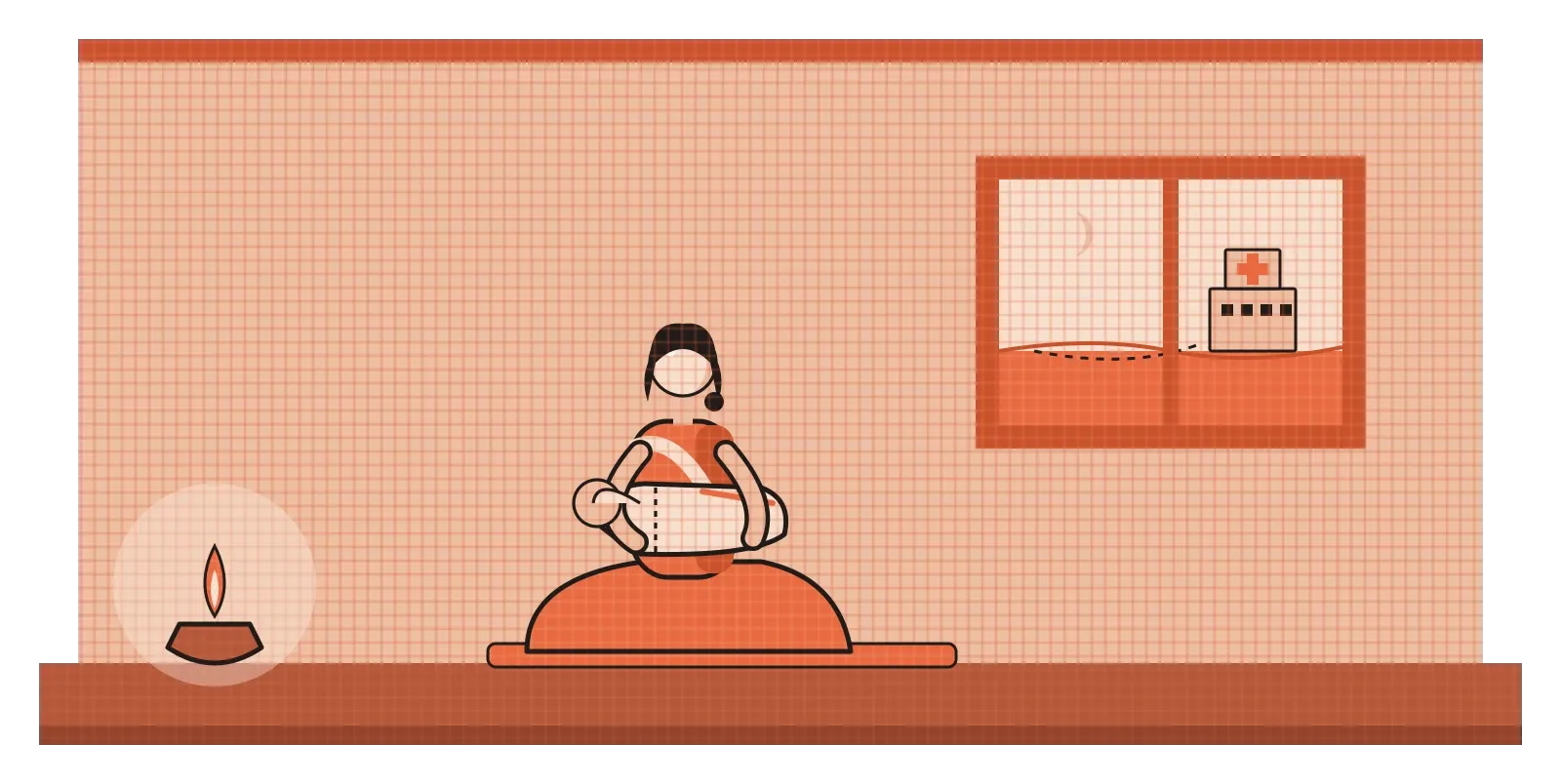
That observation is the empathise and define steps doing their job. The problem shifted from "make a cheaper incubator" to "keep a premature baby warm for hours in a home with no reliable electricity". The team went on to develop a small sleeping-bag-like wrap with a pouch of a wax-like material that can be heated and then holds its temperature for hours, at a tiny fraction of the cost of an incubator. Embrace later set up operations in India, and the product went through many rounds of testing with parents and health workers before it was used widely. I like this example because the most important design decision wasn't the clever material. It was refusing to accept the first version of the problem.
Why it spread so fast, and what it looked like in my own work
It's easy to see why businesses fell for design thinking. It offered a way to make innovation feel less like luck and more like a process anyone could follow. It put real people at the centre of decisions that were often made from spreadsheets and assumptions. And it gave non-designers permission to sketch, build rough prototypes and test ideas cheaply before spending big money. For organisations used to long planning cycles, the idea that you could learn faster by making something rough and showing it to people was genuinely new. A lot of good has come out of that, especially in public services and healthcare, where simply going and watching how people use a system can expose problems nobody in the head office had noticed.
My own experience with it is a bit messier than the diagram, which I suspect is true for most designers. When I worked on an agentic AI system at Rocketium, the work did start with something close to the empathise step: several days of sitting with the in-house design team and watching every action, every switch between tools and every workaround. The ideation happened in workshops with the founding team, including one where we generated more than forty analogies for how the AI should feel to use and kept only three. We built a first version, released it, and then got the most useful piece of testing feedback I could have asked for. Within weeks, designers were asking for the old co-pilot back.
That failure is the part design thinking diagrams make look tidy and real life does not. Our first version had a sound workflow but an overwhelming interface, partly because of trade-offs we made to ship quickly. To understand why it wasn't working, we ran an observed session where designers worked through their real campaigns while the product managers and I watched. People were reading walls of AI processing text, feeling overloaded and clicking Proceed without checking the output they were supposed to review. That observation drove the second version. So yes, the loop of empathise, define, ideate, prototype and test was there. But it didn't feel like five neat stages. It felt like being wrong in public, learning quickly, and rebuilding.
The criticism is fair, and some of it comes from designers
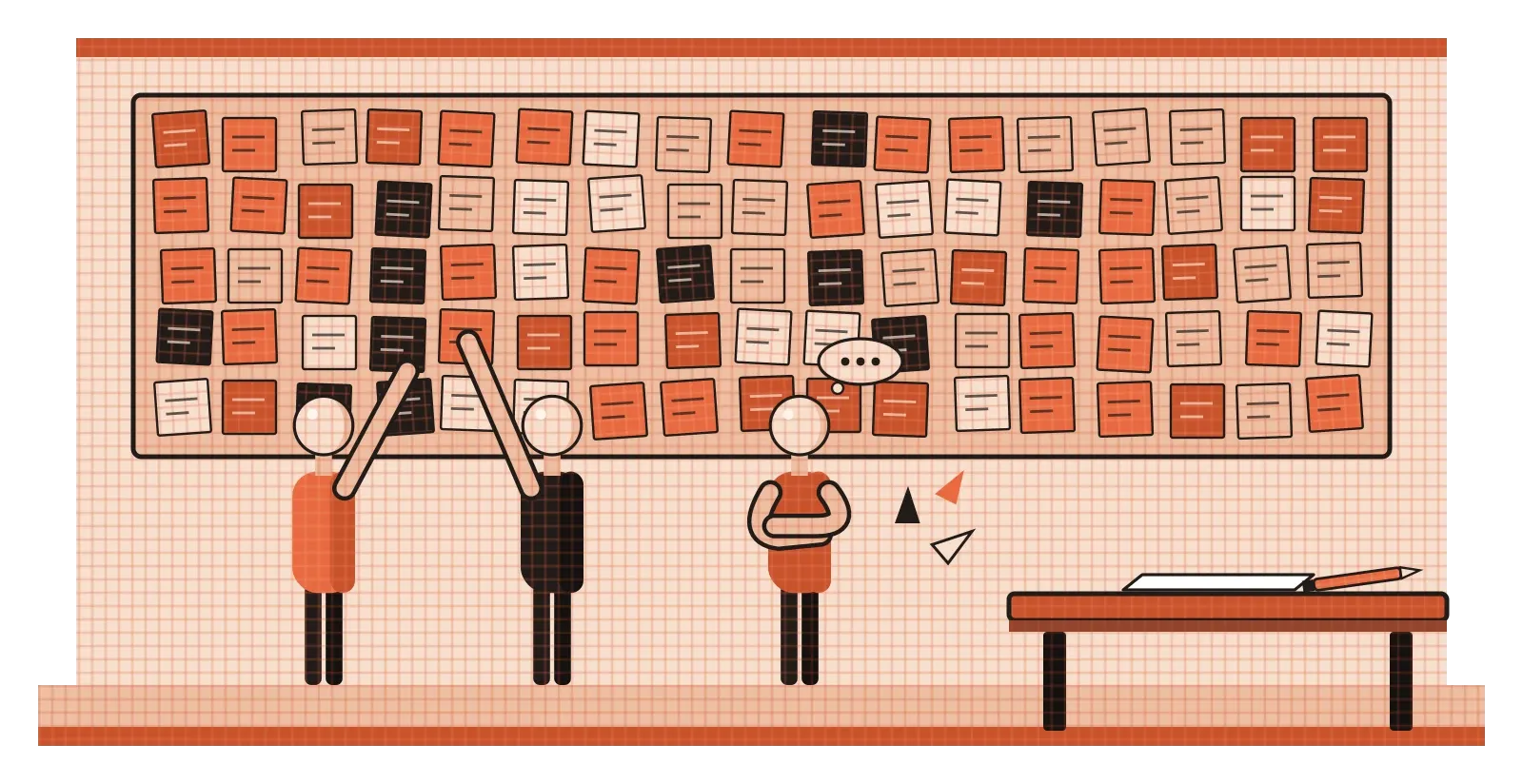
The sharpest critique came from inside the profession. In 2017, Natasha Jen, a partner at the design studio Pentagram, gave a talk at the 99U conference with a title that made the rounds online: "Design Thinking Is Bullsh*t". Her complaint wasn't about understanding people or testing ideas. It was about what design thinking had turned into in many organisations, a neat five-step process whose main visible output was a wall of sticky notes. She pointed out that real design depends on things the popular version barely mentions, such as craft, visual judgement, critique and evidence about whether the result actually works. A workshop can make people feel creative for an afternoon without producing anything that is well designed.
Others came at it from different angles. Don Norman, the author of The Design of Everyday Things, wrote an essay in 2010 calling design thinking "a useful myth". He argued that there is nothing uniquely magical about how designers think, since good scientists, engineers and business people also question assumptions and explore alternatives, but that the label was useful because it got designers taken seriously in rooms where they had been ignored. The design researcher Lucy Kimbell made a more academic point in 2011: that the popular version treats design as one universal way of thinking, when actual design practice varies enormously between a typographer, an architect and a service designer, and depends heavily on context.
The criticism I find most important is about empathy itself. A few interviews and a day of observation can easily turn into what people now call empathy theatre, where designers collect a handful of quotes, feel they understand someone's life, and then go back to the office to decide on their behalf. There's an older tradition that pushes against this. In Scandinavia in the 1970s and 80s, designers and researchers worked alongside trade unions and workers to design the tools those workers would use, a movement that became known as participatory design. Its starting point was that the people affected by a design should have real influence over it, not just be studied. Designing with people is much slower and harder than designing for them, and the five-step diagram makes it very easy to skip.
Treat it as a habit of mind, not a recipe
So where does that leave design thinking? I don't think it deserves either the hype or the eye-rolling it gets. At its best, it's a short name for a few genuinely good habits: go and see how people actually live before deciding what they need, be willing to change your idea of the problem, make rough things early, and let real people tell you when you're wrong. Those habits are worth teaching to everyone, designers or not. At its worst, it becomes a workshop format that produces sticky notes instead of decisions, and convinces people that a few days of exercises can replace years of skill.
The most useful way I've found to think about it is to separate the mindset from the method. The mindset is curiosity about people, humility about your first idea, and a bias towards learning by making. The method, the five boxes with arrows between them, is just one way to remind a team to do those things. When the method helps, use it. When it gets in the way, or turns into a ritual, drop the boxes and keep the habits. And none of it replaces the craft of actually making something good, which is where design thinking stops and design begins.
Doug Dietz's pirate ship is a good example of both halves working together. The insight came from watching a frightened child and taking her experience seriously, which is the empathy everyone talks about. But turning that insight into rooms that actually calmed children down took a lot more: careful visual design, storytelling, training for hospital staff, and working within the strict safety rules of medical equipment. The sticky notes, if there were any, were the easy part. The hard part was the design.
Further reading: Tim Brown, Change by Design (2009) · Peter Rowe, Design Thinking (1987) · Don Norman, "Design Thinking: A Useful Myth" (2010) · Lucy Kimbell, "Rethinking Design Thinking: Part I" (2011) · Natasha Jen, "Design Thinking Is Bullsh*t", 99U talk (2017)