Wicked Problems
Why some problems can't be solved, only made better or worse.
Wicked Problems
Every November, Delhi disappears
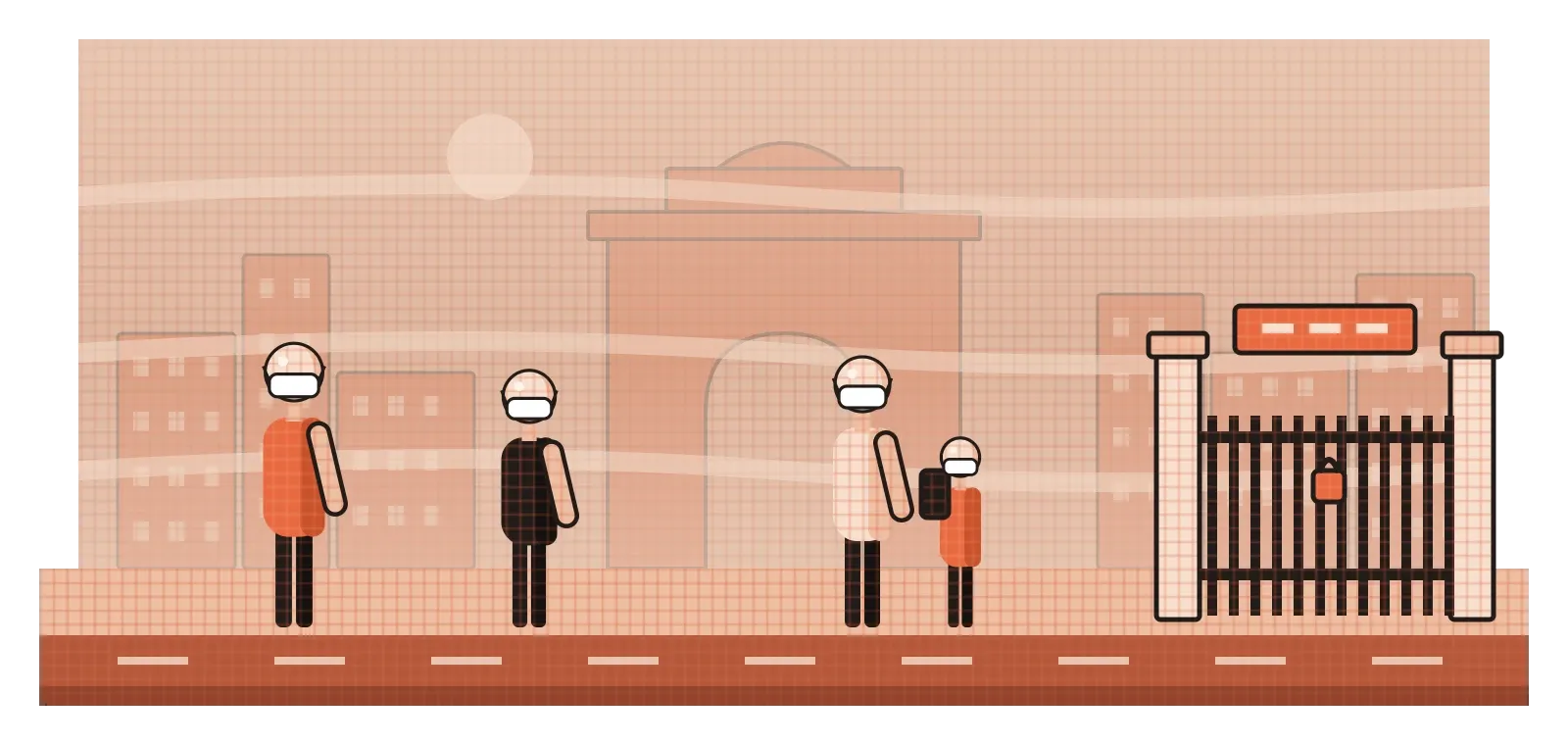
If you have spent a winter in Delhi, or even just followed the news, you know the pattern. Around late October, the sky turns a thick yellow-grey, the air starts to taste like smoke, and schools sometimes close because children shouldn't be breathing it. The causes are many: vehicle exhaust, construction dust, industry, firecrackers, weather that traps pollution close to the ground, and smoke from crop stubble burned on farms in Punjab and Haryana. Every year there are emergency measures, court orders, odd-even driving schemes and promises that next year will be different. Every year, it comes back.
It's tempting to think this happens because nobody is trying hard enough. I don't think that's the real reason. The deeper problem is that Delhi's smog belongs to a category that behaves differently from the problems most of us are trained to solve. There's no single cause to remove, no clear point at which it counts as fixed, and every fix seems to touch something else that pushes back. In 1973, two professors at the University of California, Berkeley, gave this kind of problem a name that has stuck with designers, planners and policymakers ever since. They called them wicked problems.
Two planners noticed their methods kept failing
Horst Rittel was a German-born design theorist and Melvin Webber was an urban planner, and both taught at Berkeley. Rittel had been talking about "wicked problems" in seminars since the 1960s, and the philosopher C. West Churchman wrote about the idea in a short journal editorial in 1967. But the version everyone cites is a paper Rittel and Webber published in the journal Policy Sciences in 1973, with the unglamorous title "Dilemmas in a General Theory of Planning".
Their starting point was a kind of professional frustration. In the decades after the Second World War, there was a lot of confidence that scientific methods could solve social problems the same way they had solved engineering ones. Planners, economists and systems analysts tried to apply the tools that had worked for building bridges and sending rockets to things like poverty, crime, housing and education. It mostly didn't work, and people were getting angry about it. Rittel and Webber argued that this wasn't because planners were incompetent. It was because they were treating two different kinds of problem as if they were the same.
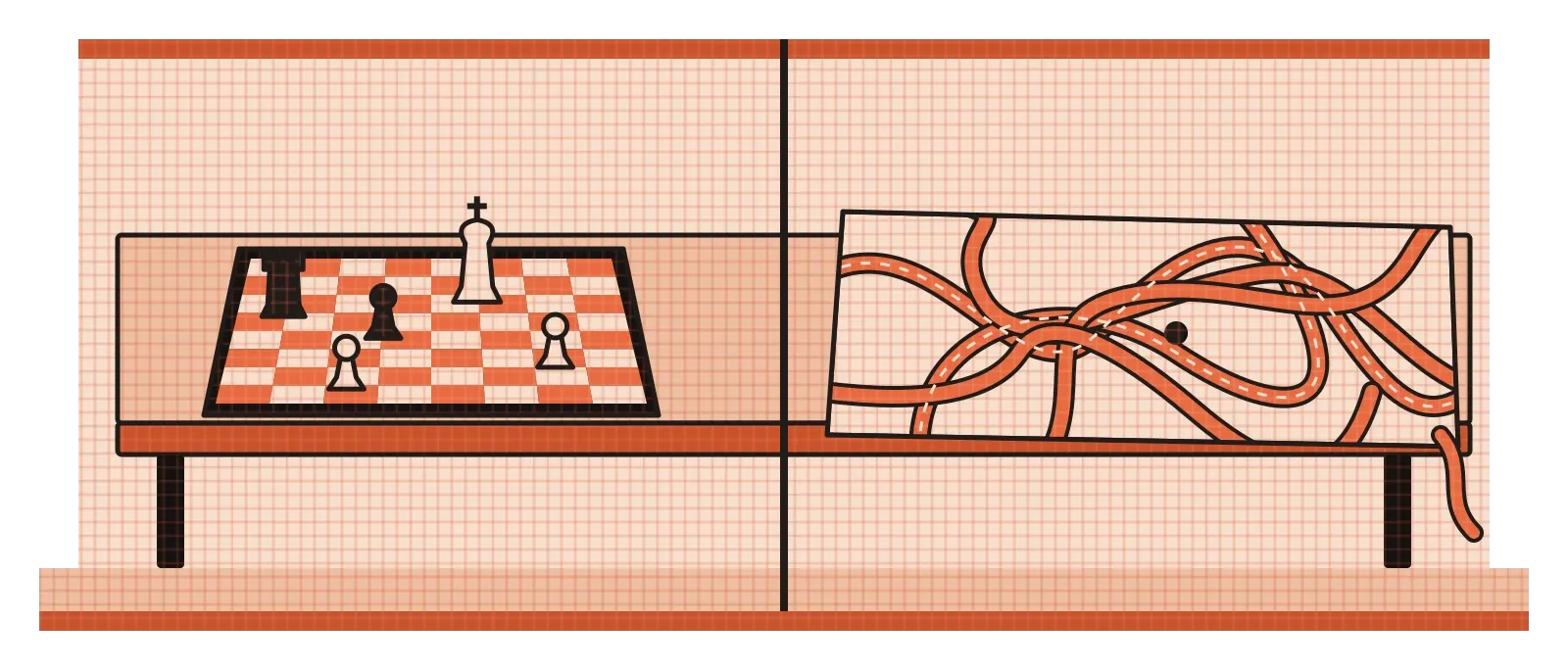
They called the first kind "tame". A tame problem can be complicated, even very difficult, but it is well defined. Think of a chess puzzle, a maths equation or working out the load a beam can carry. You know what the goal is, you can tell when you've reached it, and you can check whether your answer is right. Wicked problems are different. The word wasn't meant in the sense of evil. It was meant in the sense of tricky, stubborn and resistant, the way a problem can feel like it's fighting back. Social problems like poverty, urban planning or a city's air quality, they argued, are almost always wicked, and pretending they're tame is one of the main reasons well-meant policies go wrong.
What makes a problem wicked
Rittel and Webber listed ten characteristics. They overlap quite a lot, so I find it easier to think of them as four bigger ideas.
The first is that you can't fully define the problem before you start solving it. With a wicked problem, how you describe it already decides what kind of solution you'll go for. If you describe Delhi's smog as a traffic problem, you end up with driving restrictions. If you describe it as a farming problem, you end up with machines for clearing crop waste. If you describe it as a governance problem, you end up talking about coordination between states. None of these descriptions is wrong, but none of them is complete either. Rittel and Webber put it neatly when they said that understanding the problem and solving it happen together, which, if you read the previous posts, will sound very familiar.
The second is that there is no point at which you're clearly done. A chess puzzle ends when you find checkmate. A wicked problem has no stopping rule, so people stop working on it when they run out of time, money or patience, not because it's finished. Related to this, solutions aren't right or wrong. They're better or worse, and who decides which depends a great deal on who you ask. A policy that helps city residents breathe might cost a farmer a season's income.
The third is that there's no safe way to experiment. When you test a prototype app, you can throw it away if it fails. When a government changes a farming rule or rebuilds a neighbourhood, real people live with the consequences, and those consequences can't be undone. Rittel and Webber called every attempt a "one-shot operation" and argued that planners, unlike scientists, have no right to be wrong, because their mistakes land on other people's lives.
The fourth is that every wicked problem is unique and tangled up with others. Each one can be seen as a symptom of a deeper problem, and solutions borrowed from somewhere else rarely transfer cleanly, because the context is never quite the same. That's why copying a policy that worked in another city so often disappoints.
When a fix for one problem creates the next one
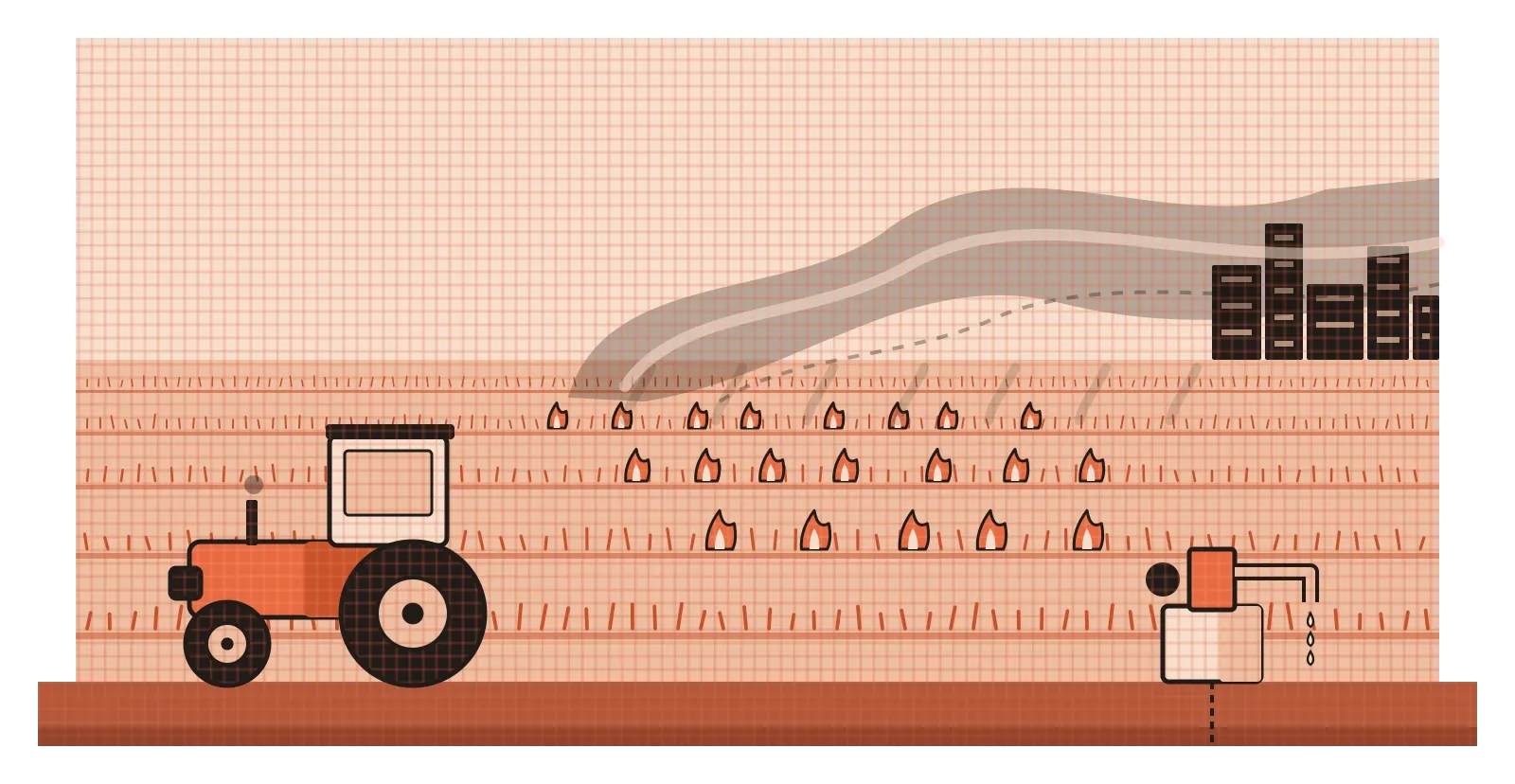
The stubble fires that feed Delhi's smog are a textbook example of a solution causing a new problem. In 2009, Punjab and Haryana passed laws that stopped farmers from transplanting paddy seedlings too early in the summer. The goal was sensible and urgent: groundwater levels in both states were falling fast, and planting rice in the hottest months used enormous amounts of water. The laws helped save water, but they also pushed the rice harvest later into the autumn. That left farmers with a very short window, often just a couple of weeks, to clear their fields before sowing wheat. Combine harvesters leave tall stubble behind, removing it by hand or by machine costs time and money, and setting it on fire is the fastest, cheapest option. The later harvest also lined up the burning with the time of year when Delhi's weather traps smoke close to the ground. A good policy for water became part of a bad situation for air.
Once you see it that way, the obvious fix, simply banning stubble burning, looks less obvious. Farmers working on thin margins need a realistic alternative, not just a fine. Over the years, governments and researchers have tried subsidising machines that sow wheat directly into the stubble, and spraying a microbial solution developed at the Indian Agricultural Research Institute that helps the stubble decompose. Some of these have helped in places, and none has made the problem go away, because each one touches money, timing, water, politics and weather all at once.
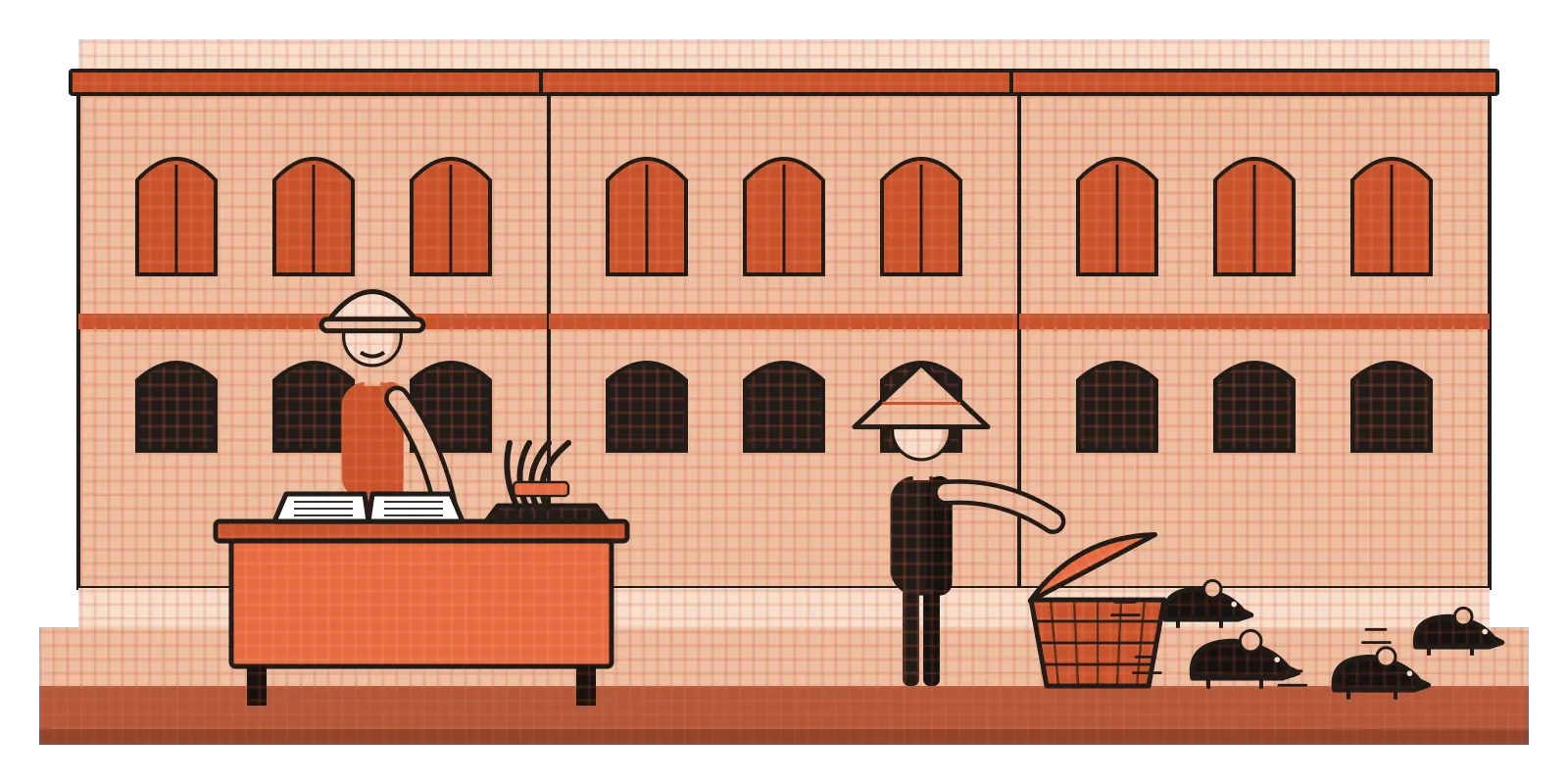
History has a darkly funny example of the same pattern. In 1902, Hanoi, then under French colonial rule, had a serious rat problem and a fear of plague. The authorities offered a small payment for every rat killed, and to avoid handling dead rats, they asked people to bring in just the tails. Before long, officials noticed rats running around the city without tails. People were catching rats, cutting off their tails for the reward and letting them go to breed more. Historians have even found reports of rat farming on the edge of the city. The scheme rewarded exactly what it was meant to measure, rat tails, and accidentally made the actual problem worse. It's a perfect case of what Rittel and Webber meant by a one-shot operation: by the time the officials realised what was happening, the policy had already changed people's behaviour.
Not every hard design problem is wicked
Rittel and Webber were writing about planning, but designers picked up the idea quickly. In 1992, the design researcher Richard Buchanan published an influential essay called "Wicked Problems in Design Thinking", arguing that design problems are wicked by nature, because designers are almost never handed a problem that is fully defined. Since then, "wicked problem" has become a popular phrase in design talks and pitch decks, sometimes used for almost anything difficult.
I think it's worth being a bit stricter than that, because calling everything wicked makes the word useless. Most of what product designers work on is complex rather than truly wicked. My work on an agentic AI system at Rocketium was a good example of this. It was genuinely hard. Nobody had a template for it, the technology was new, and there were real disagreements along the way, such as whether the AI should visibly show its work, which the founders wanted for demos and which the product managers and I pushed back on. That disagreement had a wicked flavour to it, because the answer depended on whose goals you put first. But in the end, the core problem had a clear goal, which was getting large volumes of creatives produced much faster without taking decisions away from designers. We could measure progress through adoption and production time, and when our first version didn't work, we could rebuild it. Those are exactly the things a wicked problem doesn't allow.
Where designers do run into truly wicked problems is when their work touches public life: city transport, healthcare systems, education, the design of social media feeds that shape what millions of people believe. Some researchers have gone further and described climate change as a "super wicked" problem, a term introduced in 2012 by Kelly Levin, Steven Bernstein, Benjamin Cashore and Graeme Auld. Their point was that climate change adds extra difficulties on top of Rittel and Webber's list. Time is running out, the people trying to solve it are also the ones causing it, there's no central authority that can enforce a solution, and our policies tend to undervalue the future compared to the present. Knowing which kind of problem you're facing changes everything about how you should approach it.
You can't solve them, but you can work on them well
If wicked problems can't be solved, it's fair to ask what anyone is supposed to do with them. Rittel himself offered one answer. Since wicked problems are really arguments between people who see the situation differently, he suggested making the argument visible. He developed a method called IBIS, short for Issue-Based Information System, which maps a discussion as a set of issues, the different positions people take on each one, and the arguments for and against those positions. Decades later, Jeff Conklin built on this in a method he called dialogue mapping. The idea is simple and surprisingly powerful. When a group can see all the views laid out together, people stop talking past each other, and it becomes easier to notice which disagreements are about facts and which are about values.
A few other habits help too. The first is bringing the affected people into the work early, not just consulting them at the end. In the stubble burning case, any solution that ignores farmers' economics will fail, however clean the air quality model looks. The second is framing the problem in more than one way on purpose, and asking what each framing makes visible and what it hides. The third is preferring small, local and reversible experiments over big, irreversible ones. The management researcher Dave Snowden, who created a framework for thinking about complex situations called Cynefin, describes these as "safe-to-fail" probes: try several small things, watch closely, and grow what works. That's the opposite of the Hanoi rat scheme, which was citywide from day one.
The last habit is mostly about attitude. With a wicked problem, the goal is to make things better than they were, not to make the problem disappear, and to keep watching for side effects, because there will always be some. That sounds less heroic than "solving" something, but it's more honest, and in the long run it's usually more effective.
Back to the November sky
Understanding that Delhi's smog is a wicked problem doesn't make the air any cleaner. What it does is change the questions worth asking. Instead of "who is to blame?" or "what is the one solution?", it pushes you towards questions like "which parts can we improve this year without making something else worse?", "who carries the cost of each fix?" and "what are we going to watch for once we try it?" Those questions are slower and less satisfying, but they are much more likely to lead somewhere.
For designers, I think the most useful lesson in Rittel and Webber's paper is about humility. Our training gives us a lot of confidence in process: research, define, ideate, prototype, test, ship. That process works beautifully on complex but tame problems, which is most of what we do. The danger comes when we carry the same confidence into problems that involve people's livelihoods, health or rights, and assume a workshop and a good prototype will crack them. Recognising a wicked problem is partly about knowing when to slow down, bring more people in, and accept that the best you can do is leave things better than you found them.
The Hanoi officials who paid for rat tails weren't stupid. They had a reasonable idea, a measurable target and a clear incentive, which is more than many projects start with. What they lacked was a sense that the problem might fight back. That sense, more than any framework, is what Rittel and Webber were trying to teach.
Further reading: Horst Rittel and Melvin Webber, "Dilemmas in a General Theory of Planning" (1973) · Richard Buchanan, "Wicked Problems in Design Thinking" (1992) · Jeff Conklin, Dialogue Mapping (2006) · Kelly Levin et al., "Overcoming the tragedy of super wicked problems" (2012) · Michael G. Vann, The Great Hanoi Rat Hunt (2018)